Candele

When I first lived in Italy 25 years ago, Valentino was the name of our plumber and of a boy at my daughter’s nursery school. Valentine’s Day—la festa di San Valentino—was celebrated in cities where San Valentino was the patron saint. No matter! In the days leading up to February 14th, I bought red and pink construction paper, white doilies, purple magic markers and glue, cutting out hearts and arrows to make Valentine’s cards for my family, just as my father had done for us. I bought white (“Friends”) and red (“Crush”) carnations like the ones we sent and received in grade school. I baked a heart-shaped cake and placed a little white box filled with pink and red candy at each table setting, the way my mother had. We celebrated just like I had growing up in America.

In my early years in Siena, Valentine’s Day barely made a ripple in the run up to the much more important Carnevale. Now, Valentine’s Day in Italy has evolved into the Hallmark holiday we know so well: every restaurant in town is filled with two-tops, heart-shaped boxes of candy appear in the supermarket by early February, and roses are sold out by noon on the 14th. While this may not be the Valentine’s Day I knew and loved as a girl, it’s hardly bad news. When it comes to love, more is more.

Does this trend prove that Italian culture is being Americanised? I wonder. The Siena I knew then, with its mom-and-pop shops selling dried figs and fresh ricotta, or ceramic bells, or linens with the orange and black embroidery of “Punto Senese” is long gone. Many of those small stores have been replaced by franchises of Occitaine and Calzedonia, which one could find in any European city. It’s not so much Americanisation as general commercialisation.

Italians don’t seem particularly threatened: Dante’s tongue is increasingly dotted with English, hamburger joints seem to spring up on every corner, and yet, when I returned to Siena last week after months away, life here still felt as distinct from life in the U.S. as ever. Attentive, indulgent parenting, fundamental ties to the Catholic Church, and the culto del bello e del buono—the cult of what’s beautiful and what’s delicious—continue to thrive, undisturbed by Halloween, Netflix or Uber.

I find the same is true of me: despite the trappings of Italian-ness, I still feel thoroughly American, most notably when I come back here after having been in the States.

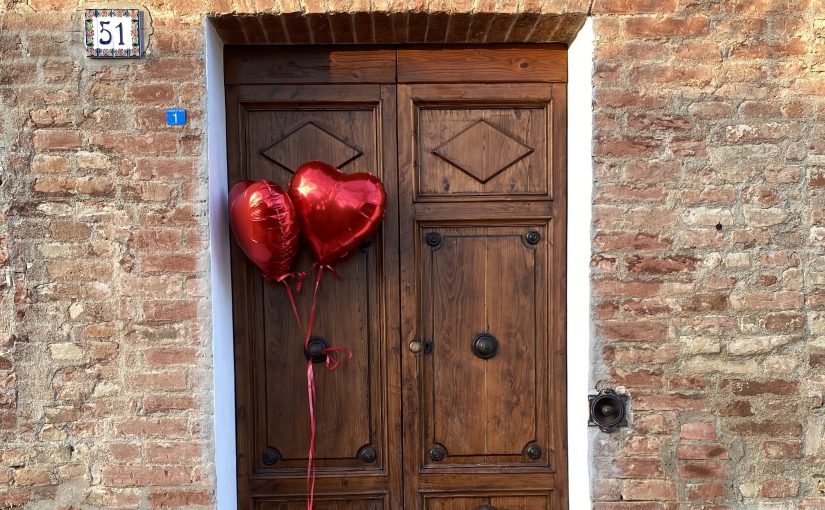
Last Friday, I decorated the dining room with heart-shaped balloons and baskets of miniature red roses. I baked a layer cake from the same pan I always have. As I was setting the table, I thought of my first Valentine’s Day in Italy. At the time, I lived with my mother-in-law, who, that afternoon, came upon me in the dining room and gasped, “What are you doing?”

“Setting the table for a Valentine’s Day supper,” I explained.

“Why the candles?” she croaked. “It looks like an altar.”

“Nonsense,” I answered, used to scoffing at her old-fashioned ideas. But when she had left, I stood back and surveyed the scene. The two red candles in their silver holders suddenly held sway over the whole table and brought to mind more somber settings, more important feasts.

To this day, I resist lighting candles. I can’t help feeling that they lend unwanted pretence to otherwise casual scenes. It seems I can no longer separate candles from church. Perhaps part of me really has become Italian after all.
Ognissanti

Last Friday, schools and businesses were closed here in Italy to celebrate All Saints Day, which marks the start of a holiday season that will end in January with Epiphany on the 6th. From now until then, meals take on even more than their usual importance.

When I first came to live in Italy, and the holidays came around, I couldn’t wait to use the damask tablecloth, to get the Ginori out of the china closet, to dust off the Murano glasses. I thumbed through recipes for what I considered the most elegant dishes—watercress soup, roasts of ham, goose or beef, stuffings, gravies and creamed vegetables, trifles, multi-layer cakes and holiday punch. But I needn’t have gone to the trouble.

First, I wasn’t going to be entrusted with any cooking. (On my third Christmas here, I got to boil potatoes for a purée.) And second, holiday meals here are made up of dishes that are eaten at the family table throughout the season—pasta with ragù, roast beef, winter vegetables—and the table is set just as it always is with a faded but ironed tablecloth, plain china, two stemless glasses per person and the scratched but sturdy old silver. The attention to procuring the best ingredients is par for the course: each woman (because here it is still very much the women in the house that plan the holidays) knows a butcher who gives her the tenderest cuts and a farmer who will save her the freshest bunch of spinach. And the cooking is as rigorous as ever, the pasta exactly al dente, the sauce simmered and corrected all afternoon, the roast delicately crisped on the outside, al sangue within and sliced as thin as a wafer. Wine is served–here in Tuscany, it’s the light, tangy, unadulterated local Sangioveses that so effortlessly accompany the hearty cuisine. Desserts are tied to the holiday: pan coi santi (a nutty raisin bread) on All Saints’ Day, Panettone or Pandoro on Christmas and clementines and chestnuts throughout the winter.

Each child can ask for a present and husbands and wives buy one another a sweater or a scarf, but gifts are hardly the focus. The main meal on any of these holidays is often lunch rather than dinner, and afterwards, it’s customary to go for walk. Then, cards are played and naps are taken, until suppertime, when the fire is rekindled, someone pulls out the leftovers and the table is set again.

I miss my family and our traditions keenly during the holiday season—my dad playing the Messiah CD around the clock for a month, my mom’s homemade cranberry sauce and succulent roast goose, watching football on Thanksgiving and opening presents in our pyjamas on Christmas morning. But, after twenty four years, the Italian traditions–especially simple, savory food and pure, refreshing wine—are becoming mine, too.

Aperitutto

A few years ago, chalkboard signs advertising “Apericena” started appearing outside bars here in Italy—cheap bars in the provinces, not swanky lounges in Milano. It had long been possible to order an evening drink (at the same bar where you took your morning coffee) and sip it while standing at the counter and munching on beer nuts, or, often, slices of focaccia or panini unashamedly sliced from the remains of the lunch rush. For students or anyone else on a tight budget, this was one way to spend your supper budget on drinks and still get something of a meal. I remember when I started hearing the word “apericena” used, tentatively, by friends. “Let’s meet for an aperitivo,” Nadia would suggest. “No–an ‘apericena,’” she’d correct herself, playfully trying out the new expression. We took to the concept fast. A combination of the words “aperitivo” and “cena” (dinner), “apericena” suggests a light meal. The word conveys parsimony, too: we wouldn’t be splurging on a rich dinner, just treating ourselves to a drink and a snack. Never mind that these “apericenas” often segued into meals; they started in a temperate spirit.

Lately, “apericena” has been moving in on entertaining at home. Tuscans have a “braccio corto,” it is said—a short arm. In other words, they hate to spend. Now that “apericena” is a thing, one can invite one’s friends over without committing to cooking and serving the three-course meal that’s the norm here. “Apericena” is low risk, too—who can’t pour chips into a bowl or set out a block of cheese? And non-committal: it’s understood that one hasn’t promised to satiate the guests.

In the US, restaurants and cafés are mostly selling munchies to their cocktail-drinking customers, not handing them out for free, as the bar near my house does when you buy a €3 Spritz. Still, even including the free snacks, the bars here must be earning a healthy profit. The bubbly wine they use for mixed drinks such as the Spritz has long ceased to be Venetian Prosecco; most bars use the least expensive spumante they can find. It costs €1 to make a Spritz, so even my bar can afford to provide peanuts.

I tried my first Spritz on a sunny terrace in the Dolomities in February of 2017. We had just stopped for lunch half-way around the Sella Ronda, the network of ski slopes west of Cortina, which one can ski all day, clockwise or counterclockwise, without needing to repeat a slope. It was my boyfriend’s parents that had introduced me to the luxury of having an aperitivo before lunch: at their country house in Castell’Anselmo near the Tuscan coast, they gathered in the living room just before 1:00pm for a glass of light white wine, or, around the holidays, Champagne, and pistachios and olives or slices of pecorino, while they waited for aunts, uncles and cousins to walk over from the other house, sons and daughters to arrive from Florence or Rome and grandchildren to come in from the yard. In the summer, a pitcher of Hugos was sometimes mixed: Prosecco, sambuca-flower syrup, lemon juice and fresh mint over ice—a cocktail that epitomizes summer, whereas a Spritz is intrinsically linked to winter for me.

As anyone who has been to a bar in Europe in the last five years knows, Prosecco, Prosecco-based cocktails and especially Spritzes have taken over café tables from Oslo to Otranto. Last Friday night, sitting on the Piazza del Campo in Siena with my Goddaughter and her friend, we could see a Sprtiz on every table. Humans like sugar, and Aperol and Campari are sweet (26g and 24g of sugar per litre respectively), as well as tangy and bitter. Who invented the Sprtiz is a matter still contested–Was it a Venetian barman serving Select (yet another kind of bitter liqueur) with still white wine or the Padovans serving Aperol and bubbly?—as is the cause of the recent boom in the Spritz’s popularity, although the marketing department at Campari (which owns both Aperol and Campari) was no doubt key. And what is the best liqueur to use? Aperol for the neophyte, Campari for the sophisticates, Select and a squeeze of fresh orange for authenticity seekers. My favorite, Gamondi, is for the individualists!

My boyfriend’s family’s lunchtime “aperitivi” are no longer: his mother died a few years ago, and the family has stopped gathering for weekend, or even holiday, meals. Like everyone else, we’re eating and drinking less, watching our weight, our cholesterol, our blood pressure. Long, leisurely lunches hardly fit into our lives these days. Still, I hope the “apericena” will never entirely replace them.

Heart and Soul

“Why did you come?” the voice accused, its owner’s head angled like a canon toward the audience, eyes raised to the top of their sockets, no white visible, only the dark irises, seeming to point at us.

I waited for what I was sure he would say–something about sustaining Irena and her mother in their time of grief, and then, maybe, an acknowledgement of how hard it is to accept God’s will and the suggestion of a different way of thinking about death couched in some soothing words. I had come to support Irena. I had come because I imagined that, if a loved one of mine had died, I would have taken comfort in the presence of friends. I had met Irena for coffee two weeks earlier, and I knew that her father, Massimo, who had had heart problems for years, had been declining, and that for the past few months he had been in the hospital, dementia bearing down on his already fragile health and worrying Irena and her mother constantly. I was glad to be able to attend the funeral, to be supportive in a small way; I wished I could have done more.

The church—a large, modern one with a nave in the shape of a fan spreading out from the altar—was full, and there were people clustered in the back, too, just as they were, I remembered, at Italian weddings, when the younger people would stand near the door, unwilling to commit to hearing the whole mass, and duck out occasionally to smoke a cigarette or to chat.

Although I am not Catholic, the Catholic liturgy, even in Italian, is familiar to me, not only from when I went to church at a monastery near Siena, but from childhood, its words being almost verbatim those of the Episcopal liturgy, and its cadences, even in a foreign language, singularly recognisable. I love the beauty of old church interiors with their dark, mottled light and their odor of incense and stone. I love the watery sound of the organ, the lyrics and rhythms of the hymns, the gorgeous language of the Bible. The discipline and pace and familiarity of the rite itself leave me feeling, not coincidentally of course, relieved and pacified. I had come, in part, for all of that, too.

“You came for two reasons,” the priest growled, his head still butting forward, “to save your soul”—here he paused, head cocked, looking over the congregation–“and Massimo’s! You heard the call today—the call to save your souls.”

I hadn’t thought of saving my soul as I had gotten ready that morning, nor, frankly, had I thought of it on any other morning, either. In fact, my soul had rarely been on my radar screen. When I am at my deepest, I think about the difference between what does or does not give a sense of meaning to my day or week or year. In those moments, I promise myself I’ll prioritise those things—time with my daughters or my sister, honing my wine project, walking the fields with the dogs—such that the sense of meaning will grow and solidify, until some day, I fantasize, it will displace all fears, all doubt.

“And thank God you heard that call!” the priest continued, “Because time is running out. You are alive, unlike Massimo, because God decided to let you breathe for a little longer, today. But you are running out of time.”

It was strange to think of Massimo’s death–or of my being alive, for that matter–as the result of someone’s deliberate choice, rather than as an inexplicable circumstance. And hadn’t I been trying to slow down for as long as I could remember? To stop thinking of life as a race? What harsh, old fashioned notions this man was preaching, I thought. I looked at Irena a few pews in front of me to see how she was reacting to the dire phrases. I saw her turn around and look beyond me at the crowd in the back; she might have been looking for someone while taking note, also, of who was there. Then she faced the altar again, twisting some strands of hair in her lefthand fingers, as I had often seen her do in her office or over coffee. From time to time, she leaned over and murmured something to her mother.

The sermon continued: we should be as the Saints, and the sooner we started, the less time we and Massimo would suffer in Purgatory. The invective struck me, suddenly, as funny—made me think of the sing-song voice and empty grin my mother used when imitating the nuns who had been her childhood teachers. She had told us a hundred times about being made to walk the rounds of the classrooms with her forbidden chewing gum stuck to her nose, how her illegible handwriting was the consequence of the nuns’ too rigid penmanship demands. The priest took himself so seriously; my mother would have laughed him off. I looked beyond the priest at the artwork hung over the altar—a colored bas-relief of Jesus, flanked by two female figures who must have been saints, though, after the modern fashion bore no halos or other identifying signs. All three of them were looking down, admiring a source of light around which Jesus’s hands were cupped, a light emanating from his groin. I stifled a wicked giggle and looked away, but the sight of the bored congregation made for a funny contrast, and I had to bow my head while I shook for a moment with mirth.

It was all so very Italian—the fire and brimstone priest, the lackadaisical congregation, the macho Jesus and his admiring cohorts. In the Protestant churches of my youth, everyone attending the service adopted the carefully-groomed look, the prissy demeanor and the painful earnestness of the pastor—but not here! The priest raged and threatened, the congregation smoked, flirted and ignored him. Italians believe in God, but it’s not as if they doubt themselves. Whereas, Stateside, we’re all constantly trying to change.

The Eucharistic prayer was said, and some people got up to take communion—ostensibly only those who had been to confession, for the priest had warned us about that, too: “Communion without confession: those of you who are doing that now are sinners!” After the mass ended, Irena stood up and explained that she had wanted to say a few words about her father but that only the briefest of thank-yous was permitted, which she said, getting in, under the priest’s glare, that she remembered her father with a smile on his face and that she hoped we would remember him that way, too.

And then we all stood up, and Irena stepped down from the lectern. She went to the head of the aisle and, smiling through tears, started to walk back up it, greeting one person at a time, taking him or her in her arms, thanking us for our support.

Bittersweet Move

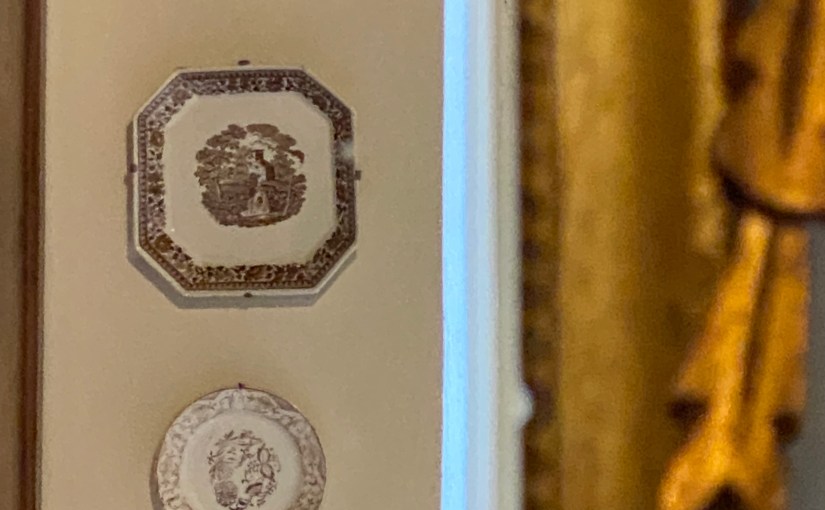
On the wall of our new house hang the nails the previous owners put up for their pictures. The other day, standing among the boxes filling the dining room, I reached down and unpacked a plate that had hung in my old house—an antique porcelain plate, cool white with magenta roses on part of the rim. It was still dusty from our comings and goings in the old house, from the ashes of the fires we lit there, from the fine, yellowish dirt that got whipped up and about in that windy place.

I hung it on a nail, admiring it, enjoying its shape, the brushwork of the roses, its translucent rim. I remembered finding it at an antique fair among similar but slightly bulkier or brighter or darker plates that I would never have bought. I thought about the moment in which the previous owner had hung whatever he had hung on that nail, twenty or thirty or fifty years earlier, and I glimpsed, too, the cliché of my children packing the plate and the rest of it back up again one day. Still, I would decorate this room and the rest of the house as I had the old one, with plates and chairs and rugs chosen by me for their particular look and feel. The items would lend our lives grace, warmth, a certain hue. We would eat supper with this plate, maybe, hanging near us, for years to come. The dust would collect again. Something was descending through the ages, I felt, and we would be a part of it.

There was a certain hilarity to my cherishing these objects, I knew, to the joy I found in those pretty, senseless things, in the feeling of plucking them out of oblivion, bringing them into my warm home, giving them a place.

I felt sharply the ridiculousness of my actions. Like that of the owners before me, my creation would live for a mere instant, relative to the life of the house and the rest. I did not, for that moment, fear death, but I felt deeply sad that the evenings together, that our moments in this house would some day be cut short, that I could not go on enjoying it all, go on enjoying what I felt I had just started to savor, that it—or rather, I—would end.

Cavalcando

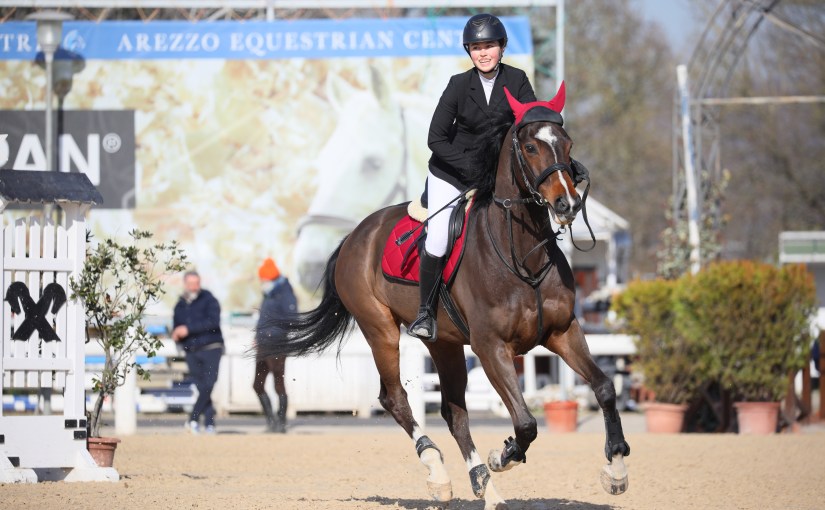
At the fairgrounds, my daughter watches others compete until the last minute, and then has to rush to tack up. The sheen of her boots or whether she remembers her gloves don’t worry her—she has ridden a horse five or six days a week for most of the past decade so the ceremonial aspects barely register. In the warm-up ring, while other instructors shout last minute advice, hers—in a knobby knit hat and fluorescent sneakers—only nods. Cantering around, my daughter holds her shoulders at an angle that evokes her father, more even than the expression on her face does—one of focus on the movement, of consciousness of a flow through her and through the horse as if through one body. She jumps an oxer, then she and her horse exit the tent and cross the piazza to the competition arena. 

When she was six months old, I would hand her up to her father atop King and he would ride out into the meadow, one hand holding her in the saddle and the other holding the reins. As soon as she could walk, she liked to feed King his oats, holding the bucket while he ate. Later, she rode while her father held a lead line, and soon, he unhooked the rope and she rode by herself, while he watched from the center of the paddock, the horse–mystifyingly to me–obeying the commands of those little limbs.

My sister taught me to ride when I was 7 or 8, in our paddock at home, on her Appaloosa, and until I came to Italy at the age of 31, my only other occasion to ride was an ill-conceived gallop through the Fontainebleau forest while studying in France, for which my group was upbraided by the owner of the sweat-drenched, foamy-mouth, terrified horses we had borrowed for the afternoon. Still, when I moved to Italy, I agreed to ride, if only to flank my new husband in his favorite pursuit.

That first winter, he would home from work at lunch time, and we would ride together, in the ring set up in the olive orchard, on a terrace that eventually became part of our vineyard, or we would set off through the wooded hills behind our house, our horses equally as surefooted on the wet leaves and moss-covered rocks of the outward bound stretch as over the muddied, boar-ravaged fields of the charge toward home. A mile or two from our property was a 17th-century villa and its private woods, hundreds of acres of wide trails dotted with stone grotesques, intersecting at carved grottos or archways, crowned by a hermitage at the top of a steep, rocky trail that afforded a view of the back of the villa, its formal gardens, our property lower down and the valley below, all the way to the Monte Amiata south of Siena.

My husband never said where we were headed, nor would he agree to a set time limit for our ride, thereby enhancing the sense of adventure. His horse, Russ, was skittish and reared or tried to take off if a pheasant rose from the brush, whereas mine was calm, though she tripped occasionally, due to an old injury, sending me forward hard onto her neck if I was distracted. My husband reassured me: if I stayed with her, I would be fine. 

He participated in weekend shows, all over Tuscany, for which I would pack a picnic lunch while he loaded his horse and his tack into the trailer. I watched him compete in Arezzo, Migliarino and Pontedera, hanging on the ring’s barrier in wintery winds or cracking heat, Russ’s sheer size making their grace all the more moving to me. He never bothered to braid Russ’s mane, and he wore a tweed jacket rather than the regulation white britches and dark coat—and won all the same.

My (now ex-) husband learned to ride as an adult, although he had always wanted a horse, and grew up in what must be one of the most horse-loving cities in the world, Siena. He was clever and courageous with horses out of necessity: he could not afford high quality jumpers. He had bought Russ from his friend and competitor Alessandro when a stress fracture to Russ’s hind hoof was revealed: Russ might never suffer an outright injury but nor could he be sold for the mid-five figures that his breeding merited. And he bought King, an Irish thoroughbred, as a two-year old, after he had been discarded as a race horse, for a thousand euro.

Over the years, I paid close attention to horses and riders at practices and at the shows we went to, to figure out what makes for a good technique—how the rider holds herself, the angle of her back, the length of the reins, where she looks; how the horse holds its head, whether he jumps way over the rail or barely clears it, how tight his turns are. I thought that, eventually, I’d be able to comment if not expertly than at least without saying the absolute wrong thing. But whenever I’m convinced I’m watching a rider whose reins are too long and a horse that’s slow and disobedient, my daughter will say under her breath, “She’s rides well,” or “Cavallo bravissimo!” In the wine business, where I’ve spent most of my professional life, you can learn a lot through direct observation—looking, smelling, tasting. It would seem that with horses, it’s different, because after all these years, I really can’t tell the Thoroughbreds from the nags, the novice riders from the champions. 

On the other hand, I’ve become an expert on fairground comforts, having figured out that Pontedera has better cappuccino but that Arezzo’s tramezzini win out. Arezzo is more chic, too, with large, sandy, white-fenced rings, snug stalls and boutiques where, as I’ve learned first hand, you can pay double for a crop to substitute the one you forget to bring. 

At the barn or at shows, I try to emulate the horse moms who were or are riders themselves. I offer to comb out the tail, fasten the girth, or give my daughter a leg up. I would be proud to lead the horse around for a cool down or a warm up or, heck, a show off! But, usually, my daughter steps around me, suggests I go get a cup of coffee or reminds me to take a video when she rides, so I head out to ringside to watch the others, until my daughter enters the ring. I have seen her ride a hundred times, and yet, when they trot in, I am always struck by their beauty, my daughter’s long legs, her sharp glance and the soft curls under her hat, King’s narrow shoulders and elegant proportions, the arc of his neck—poetry in motion.

Immobile

Immobile, in Italian, has two meanings, one, “unmoving,” just like its English equivalent, and two, a “property or real estate asset.” The two meanings have converged for me recently, in an unmoving way.

This morning, I locked myself in the bathroom. It had been one of those weeks: we’re moving house—actually, I am moving house, my teenage daughter and my boyfriend having done less to help with the move than our pet fish, which, after being transported sloshing and slopping IN its aquarium (my idea) to the new house, spent a week leering at me from the bottom left corner, in that fishy way it has, as if complaining about its new quarters.

My daughter has been complaining more explicitly. “This house sucks!” has become her mantra, the house having replaced me as the reason for all her problems—arriving late for school, forgetting a textbook, not being able to find THE ONLY JEANS she will wear—this last actually a reasonable accusation given that we do not have a working washing machine.

We had been living in limbo, our old house already missing sofas, chairs and tables, our new house still without beds or appliances, all thanks to my now-clearly-reckless plan to do most of the moving “ourselves,” in an interval of eight weeks between the two days for which I hired a moving company. After a few weeks of going back to the old house to do laundry, the movers finally brought my extra-large washer to the new house, carried it upstairs and attached it. It would not start, however, and I discovered that the water supply to the laundry room was turned off. Undaunted, using a wrench, I experimented with opening and closing various valves—to no avail. Then, the other day, I noticed there was another washer attachment downstairs, but now there’s no one around to move that monster back down. I have, however, managed to drill some holes in the laundry room wall and hang clotheslines, so we are fully prepared to dry clothes whenever it becomes possible to wash them.

The kitchen came much better equipped. There’s an oven—“brand new” according to the former owners–which I keenly tried out on the first night we spent in the house. It has a number of quixotic features, including a handle on its door that heats to the same temperature as the oven itself and an internal space unencumbered by racks. I could have lived with these eccentricities, but the oven also short-circuits the entire property. As the technician revealed on his 100-Euro visit, although the oven was indeed new, it had sat unused for so long that its “resistenza,” or heating element, had failed. A new one was ordered, and when he brought it, the technician not only charged me another 100 Euro but immediately diagnosed what was wrong with the dishwasher, which has been leaving a grainy film of churned up food bits on whatever I load. The silverware basket was interfering with the circular motion of the spray arm: first, I tried cutting off its handle (Do not try this at home!) and when that didn’t work, I abandoned the basket, scattered the knives and forks around in the top level and pressed start. The spray arm still didn’t turn, though, because it was blocked by dinner plates. I had assumed a dishwasher was equipped to handle a standard nine-and-a-half inch plate—were plates smaller in the old days when the dishwasher was born? Hidden upside: without plates encumbering the dishwasher, the scattered silverware comes out much cleaner.

The lack of WiFi at the new house would normally be driving me nuts—you’d think I’d need it to run my business–but I haven’t had time to run my business—I’m too busy moving!–so being off the grid is mostly fine. In any case, the 1.8 mega-byte per second cell network happily accommodates what I have been doing instead: hate-texting with the movers. They were friendly at first, but they took a three-hour lunch break one hour into an eight-hour work day, which in itself is fine—a man’s gotta eat! What irked me was that they had rented me a fancy moving truck with a crane for those same eight hours, the operator of which they accidentally took with them on the lunch-break marathon. He had to eat too, as the firm texted me back. At that, I stooped to texting a long paragraph (always a sign of losing the upper hand) to point out that my employees have regular lunch breaks, too, -regular in the sense both of daily but also of “at a normal hour,” i.e., not at “10 IN THE F@#%ing MORNING!!!!@#?!”

I’ve been trying to point out to my daughter all the advantages of the new house. Most of the other appliances function. The doorbell, for instance, rings when you push its button, although it may feel marginalised by now since the front door no longer closes. The lock started giving me trouble, so I had the handy man take it apart, because I was afraid I’d get locked out. He put it back together, but got a key stuck in it so that it no longer turns, which together with the swelling of the old, long-unused wooden door, leaves the entrance looking very welcoming, as if it were signalling in an underworld code, “Come rob this house.”   

A permanently open front door would worry me from an ecological standpoint, but “It isn’t winter yet,” as my electrician keeps telling at me when I call him to come and unblock the boiler that he certified on the day I moved in for 150 Euro and which stopped working as he drove off. Stopped working is maybe too harsh a way to describe the boiler’s recent behavior: it does work after I reset it, for an hour or so, but I spent more time resetting the boiler last week than I did washing dishes by hand, so the jury is out.

Other than the front one, doors are mostly not a problem, except for a few of which I had to remove the handles—the inside or outside handle kept dropping to the floor upon closure, risking leaving someone closed in or out of a room, but without any closing mechanism at all, it would be impossible to get trapped. Except I did, this morning, in the bathroom: I had forgotten to remove the outside handle and was now locked inside.

Maybe it’s for the best, I thought. I can take a long shower, and someone will eventually find me. Alas, the boiler needed re-setting so there wasn’t any hot water.

The Wine That Isn’t

Early in 2021, after a protracted search for a piece of land with old Sangiovese vines and the right kind of sub-soils, I bought a two-acre vineyard. Except I didn’t: according to ARTEA, the regional agricultural database, the land where the vineyard stands is a wheat field. Before buying, I explained this to the owner in the hope of getting him to lower his price. He did not argue with my logic—of course, if the land were a wheat field it would be worth less–-but he insisted I was wrong about how the land was classified in ARTEA: his vineyard was recognized as such by the Tuscan region. He knew this because, some years ago, he had been subject to a fine on the basis of a vineyard-related issue. He could not recall what the issue was, nor did he have the paperwork at hand, but he remembered the amount: €218. “Look again,” he suggested. That’s when the real fun started.

I figured that to gain the upper-hand in our negotiations, I needed to show him the printed certificate from ARTEA that listed his land holdings as wheat fields, but he, as owner, was the only one who could request the certificate. Was a 75-year old farmer without a bank account or a cell phone, going to call ARTEA (the main number is always busy), navigate the menu to find the person who could grant his request for a land use certificate, and provide an email address to which that could be sent, all so he could sell me his land at a lower price? 

You guessed it, I stopped trying to negotiate and agreed to his price.

When I transferred the deed, I noted that the land use indicated for the plot I had bought was simply “arable land.” The local office of the farmers’ union set me up as a farm entity, and we agreed to update the land use to “vineyard” as soon as possible. Then the growing season started, and I was busy pruning, tying, mowing grass, monitoring pests and handling all the work that goes into producing healthy grapes for the harvest–-working, in short, in my vineyard.

At the end of October, when I finally had all of the grapes from the 2021 harvest in the cellar, and most of the tanks were winding down their fermentations, it was time to quantify the production and file a record with ARTEA of grapes and wine produced. 

I called the farmers’ union office for help making my first grape and wine production declaration. I explained that the yield was fairly low, because the vineyard was old. (75 years ago, vines were planted interspersed with fruit trees like olives, apricots and apples, and in far-apart rows, between which wheat or barley was sown.) Sig. Bondi, the union office manager, pulled up my farm’s file on his computer. 

“You can’t have produced any grapes,” he said, “because you don’t have a vineyard.” 

“Ha ha,” I answered, trying to move on. “I produced about 500 litres of red wine and 400 of white,” I explained, which, given the permitted grape-to-wine ratio of 69%, meant that I had produced about 740 kg of red and 580 kg of white grapes. 

“Ms. Macy,” Sig. Bondi interrupted, “you cannot make a grape declaration if you don’t own a vineyard.”

He had opened GoogleEarth to my vineyard’s coordinates. “Where did the grapes actually come from?” he asked—did he actually wink or did I imagine it?

“From my vineyard!” I protested. “Just below the olive orchard on the dirt road labelled ‘strada del Casello,’ you can see the vineyard rows quite clearly.”

“Those are olive trees,” he said. 

“Nope,” I said. “They’re pear trees—non-fruit-bearing trees planted 75 years ago as supports for the vines. Those tufts of green are the tips of the pear trees, blocking the view of the vines from above.”

“ARTEA will never accept that,” he informed me.

“They don’t have to,” I said. “They can come and see that along each row, a hundred vines are planted.”

“ARTEA doesn’t pay visits,” Sig. Bondi said. “They use GoogleEarth.”

I launched into a defense of my vineyard: its age and importance as to how viticulture was once conducted in Tuscany, the quality of the wines that could be obtained from grapes from 75-year old vines, the growing interest around the world in preserving old vines, the prices, even, that old-vine wines could obtain. I offered to send digital photos with GPS coordinates and to have a notarized report prepared—but it was no use. Sig. Bondi would load my photos into the ARTEA database and request the update to the land use, but for the 2021 vintage, I would not be able to make a production declaration. 

The amount of wine produced in Italy–-in Tuscany and in each of its appellations–-is controlled by limiting how many vines can be planted, how many kilos of grapes can be produced on each vine, and how many liters of wine can be made from a kilo of grapes. The assumption is that if volume isn’t controlled, every Tom, Dick and Harry will run outside and plant a vineyard (that has kinda happened anyway), overcrop it (plenty of that going on) and water down the wines (not the worst way wines are doctored in the cellar) to maximize production volumes. Quality will be adversely affected, customers will get ripped off, and Tuscan wine will get a bad reputation. It might be easier to let the market limit volumes—I have faith that wines from badly overcropped vines to which water has been added in a high proportion won’t keep a winery in business very long, but no wine regions agree with me, so I have to live with the rules.

In Italy, I find, time and again, that what counts is the paperwork. As businesses have been forced to comply with new laws for the containment of Covid, for example, I’ve noticed, at the entrance to office buildings, a table with hand sanitizer, an electric thermometer and a registry of visitors, their body temperatures and their phone numbers—except there are never any names on the list. I’ve noticed in cafés a sign requiring the Green Pass for indoor service—except most of the time, no one asks to see it. Even in my winery, there’s a cleaning log posted at the entrance, on which my colleague or I sign off each morning that we have fully disinfected all surfaces in the winery. My workplace safety consultant keeps reminding me to make sure the new wine cellar is compliant — “especially on paper.” It often seems the paperwork is more important than the actual compliance: in the vineyard, the grapes were healthy and the wines are beautiful–-but the paperwork is wrong.

Think of it this way: my 2021 wines were born, they just don’t have a birth certificate. I will find a way to legitimise them, no doubt with the help of the farmers’ union–-who may be able to issue me the right piece of paper. In the meantime, I’ve never enjoyed drinking wheat with my dinner as much as I do these days.

Taste What Terroir Means

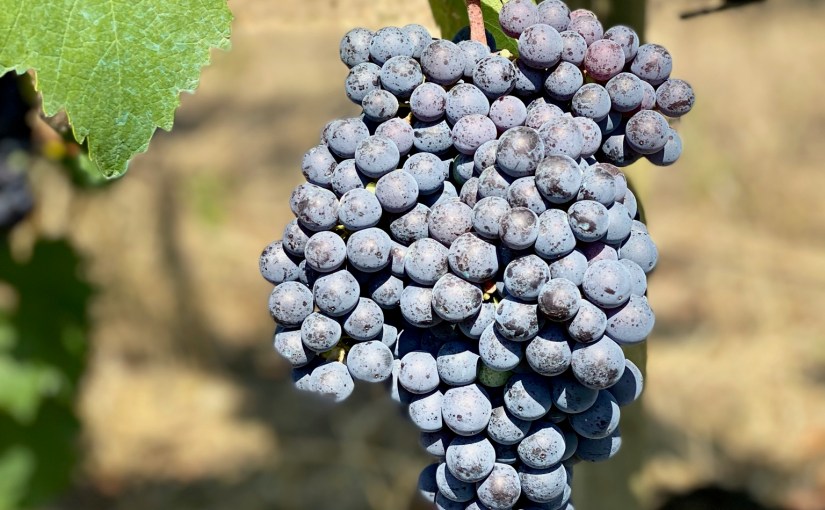
Tuscany has some glorious terrains, with the potential to make wines on par with great Burgundies. We’re also blessed with an indigenous varietal—Sangiovese—that can make wines that are headily aromatic, lusciously tangy and ethereally delicate. All of that starts in the vineyard—actually under it, with a deep understanding of the nature of the land. 

Yet Tuscan wines historically were not and for the most part still aren’t being made with the terrain foremost in mind, the way those in Burgundy are. To begin with, estate owners don’t necessarily know their land well, because they don’t farm it directly: centuries of sharecropping kept estates large and their owners far from the soil. No wonder that today there is little consensus as to which soils produce the best grapes and even less awareness of just how rare those soils are. 

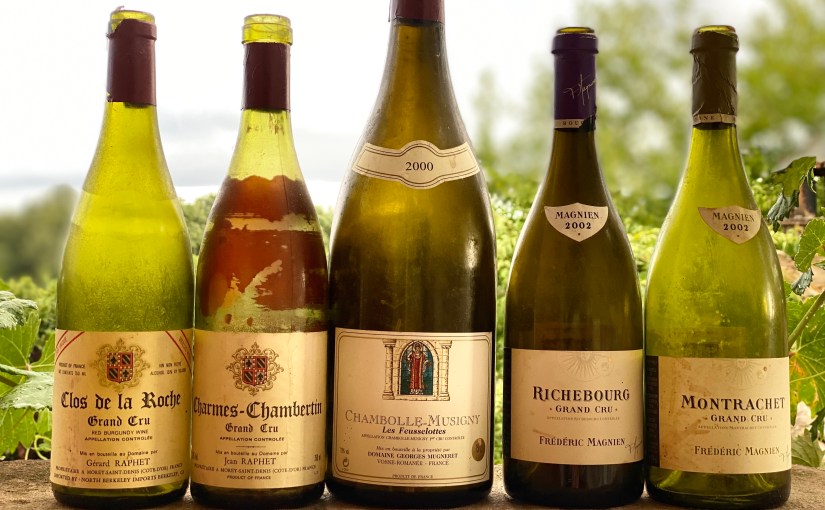
A few years ago, I inherited a cellar of wine from Burgundy, mostly Côte de Nuits, mostly Premier Crus with some Grands Crus and Villages thrown in. The bottles came from a group of two-dozen or so domains, wineries such as Mugneret-Gibourg, de Vogüe, Pousse d’Or, Raphet, Arlaud, Magnien, Dureuil-Janthial, from the 1990s and early 2000s. These bottles became my education in wine: they calibrated my palate to delicacy, subtlety and nuance. As anyone knows who has been lucky enough to spend a few years drinking exclusively Burgundy, almost anything else starts to taste clunky and dumbed-down by comparison. All too soon, I had finished most of the Burgundies–and could certainly not afford to replace them! I wanted to go on drinking wines like those—I was spoiled. I couldn’t imagine NOT having a glass or two of these beauties in the evening–so I took the rather radical step of deciding to try and make wines like them.

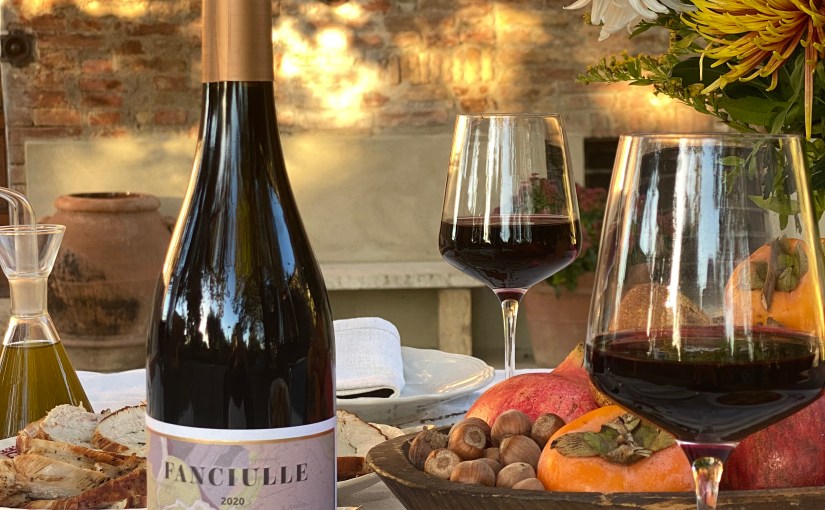
I had tasted Italian wines which I classed with top Burgundies: aged Sangioveses from Castell’in Villa, from Sugarille (Gaja’s estate in Montalcino) or from Soldera,  that had that mouthwatering tanginess, delicacy and persistence which I loved. I had also experienced these sensations tasting some just-fermented Sangiovese in 2009 at a winery in Chianti Classico that sits on an outcropping of pure limestone. I knew the potential was there in the local varietal and in the soil. Thus, the concept of Fanciulle (fan-choo’-lay)Vini was born. 

Make no mistake: the geology of Tuscany is known. Based on a geological map of Tuscany made in the 1960s, I was able to identify half a dozen different sub-soils that seemed promising in terms of their potential to grow grapes with complexity and a distinctive taste. I researched and, over the next several months, contacted wineries that had vineyards planted on these soils. I negotiated to buy grapes from them, which I fermented in small tanks, side-by-side, in my own cellar, so that I could be sure the wines were kept pure. Two years later, I can now taste the wines that emerged from these different soils—some of them 60 million years old, some of them only 2 million; some limestone, some sandstone, some mixed—and perceive immediately the impact the terrain had on the taste of the wine. And you can too: there is no mistaking our leaner, more austere Vigneto Primo–made from grapes grown higher up, on rockier soils–for our Villaggio–a plusher, fruitier wine made from grapes grown lower on the hillside, in clay-rich soils. When the 2020 wines are released in March of next year, you will be able to taste wines made from grapes grown on three additional terrains, all with extraordinary potential, yet none exactly like the other.

Traditionally, Tuscan wine has been made in an entirely different spirit, one that  focuses on recipe, for example, on which kinds of grapes are allowed, on which containers (steel or wood or cement, or the current trend, terracotta “amphorae”) can be used for fermentation or cellar aging and on how long after the vintage the wines may be bottled and sold. These “recipes”—the rules that govern winemaking in various Tuscan and Italian appellations—were established to preserve a recognisable style that sold well, but today, the result is lots of safe, pretty good wines that taste alike. Of course, appellation rules exist in Burgundy, too. And yet, when I ask a Côtes de Nuits vintner a question about her wine, she responds not by telling me about her cellar equipment but by talking about her soil, her terrain. The best winemakers live and breathe their land: they—and not just their employees—are in their vineyards daily, year round. They speak of their soil and its variations with a reverence I have not encountered elsewhere.

Tuscan soils merit similar treatment: winemaking centered on them–born of them, literally and figuratively–will yield wondrous wines, exciting in their individuality and faithful to their origins . 

The Mediterranean Diet

Thanks to high cholesterol, I recently spent an hour at the Ospedale Universitario in Siena, listening to a cardiologist preach the importance of diet, exercise and stress management, whereupon I confessed partially to my sins: the occasional morsel of cheese, the obligatory wine business dinners, the impossibility of scheduling time for exercise. The doctor gave me a knowing smile and pointed out that Clinton, Bush and Obama had regularly gone jogging on the White House grounds. Was I busier than the leaders of the free world?

Nothing the doctor said was news to me. Although my mother’s mother had been a meat-and-potatoes devotee, my own mother is not a particularly keen cook. I remember dinners of spaghetti with meat sauce, picnics with broiled chicken and the right to ask for steak and peas on my birthday, but my childhood memories are free of the intense associations today’s foodies claim. I had a sweet-tooth, which Mom’s orange juice-wheat germ cake (the only dessert in her repertoire) addressed, as did my father, who ate rows of Fig Newtons while watching the ball game on TV.

Although she was not into cooking, my mother had strong views on health. My childhood was peppered with snide references to “glop” (her term for any packaged food), as well as with her various tenets: “Shop the outer aisles of the supermarket—where the fresh foods are kept;” or, “Park as far from the shop as you can. The walk is good for the heart.” The messages seeped in, such that, in front of the Director of Cardiology at the hospital, I could not claim ignorance of the facts.

During high school, I made myself a peanut-butter-and-jelly sandwich every day for four years, picked at my dinner and ate pizza and drank grape soda in the dormitory at 9pm, but I played soccer, ice hockey or lacrosse six days a week, and thus managed to maintain a strange “health” equilibrium. As a young adult in college and afterward, while I was working in New York City, I lived on coffee, plain bagels and non-fat frozen yogurt and worked out only sporadically. I am not sure I was unusual in my habits: does anyone think about cardiovascular health for its own sake at age 23?

Ever since au-pairing in the southwest of France at age 15, I had had my eye on Europe. I remember Madame Geoffroy, whose children I looked after—rail thin, deeply tanned, her movements so graceful and deliberate that she seemed to be on the verge of dozing off—padding into the house from the pool in her red one-piece bathing suit and strand of pearls to pull a rôti de porc out of the oven and uncork a bottle of Graves Blanc. She was just what I wanted to be—luxe, calme, no volupté.

My fantasy bloomed when I moved to France in 1994 and was told not to hold back, that my body would “get used” to eating a cheese course after every meal, and, a year later, to Germany, where the young couples my first husband and I were friends with loved eating the dishes I had perfected since that summer at the Geoffroys’: creamy coq au vin, meaty daube and buttery gratin dauphinois. Occasionally, I jogged with a friend in the Englischer Garten; more often I dined out on an expense account. In theory, my move to Tuscany in 2001 brought me to the epicenter of Mediterranean living: excellent weather year round and the consequent active lifestyle; rivers of olive oil and oceans of red wine; seasonal, home-grown vegetables and pasta anchoring every meal. I had all of that, but while true to the letter, that description misses the point.

A typical Italian breakfast consists of cookies and coffee, or “orzo,” a caffeine-free coffee facsimile given to children, a meal my mother would call “empty calories.” Lunch is pasta, which, if served with tomato sauce, elicits the question (in our home), “Who’s dieting?” Dinner is a roast with potatoes; dessert is cookies again, this time with wine instead of coffee. Weekend lunches and dinners are often preceded by an aperitivo—a glass of wine, a few slices of ham or cheese, a handful olives. As a friend of mine succinctly puts it, in Tuscany, the bread is white and the meat is pork.

There is nothing immoderate about our routine: no snacking, no fast food, almost no butter. And vegetables do play a role, especially in summer when they are eaten, occasionally, neither fried nor beaten into a flan. But all the while the cardiologist spoke that day in the hospital, a pyramid loomed in the back of my mind—you know, the one from the FDA, with the layers of foods—whole grains at the wide base, fruits and vegetables just above, and all the “glop” at the tip? My mom taped a picture of that pyramid to our refrigerator door sometime around 1974, and referred to it throughout my childhood and adolescence, whenever my sister, father or I asked for junk food or sweets. Listening to the doctor, I started to realize that the three months of eating our garden tomatoes each summer may not be fully cancelling out the effects of the other nine months of the year’s diet of pecorino, prosciutto and Prosecco.  

The results of my blood test confirmed this: my cholesterol was 260. It turns out, staying well is not only a matter of mindset or balance or luck. I cannot see my blood vessels clogging, but they probably are. My bones and muscles feel fine, but then, I sit at a desk all day! How would I know how they are doing? Eating healthily and exercising never feel like urgent “to dos,” which is why I have put them off, for too long.

“Three months to improve,” Dottore Mondelli told me, “or you’ll need to start taking statins.” So I am trying: no spare ribs or salami, no Fiorentina steak and no cheese (ouch)—and I am looking to my dad for inspiration. He is 98 years old, and his cholesterol is 147. He listens to my mom and mostly follows her advice as far as eating is concerned. Still, he has lived in the country for years. Could it be that the real reason he’s so healthy is simply all that fresh air?